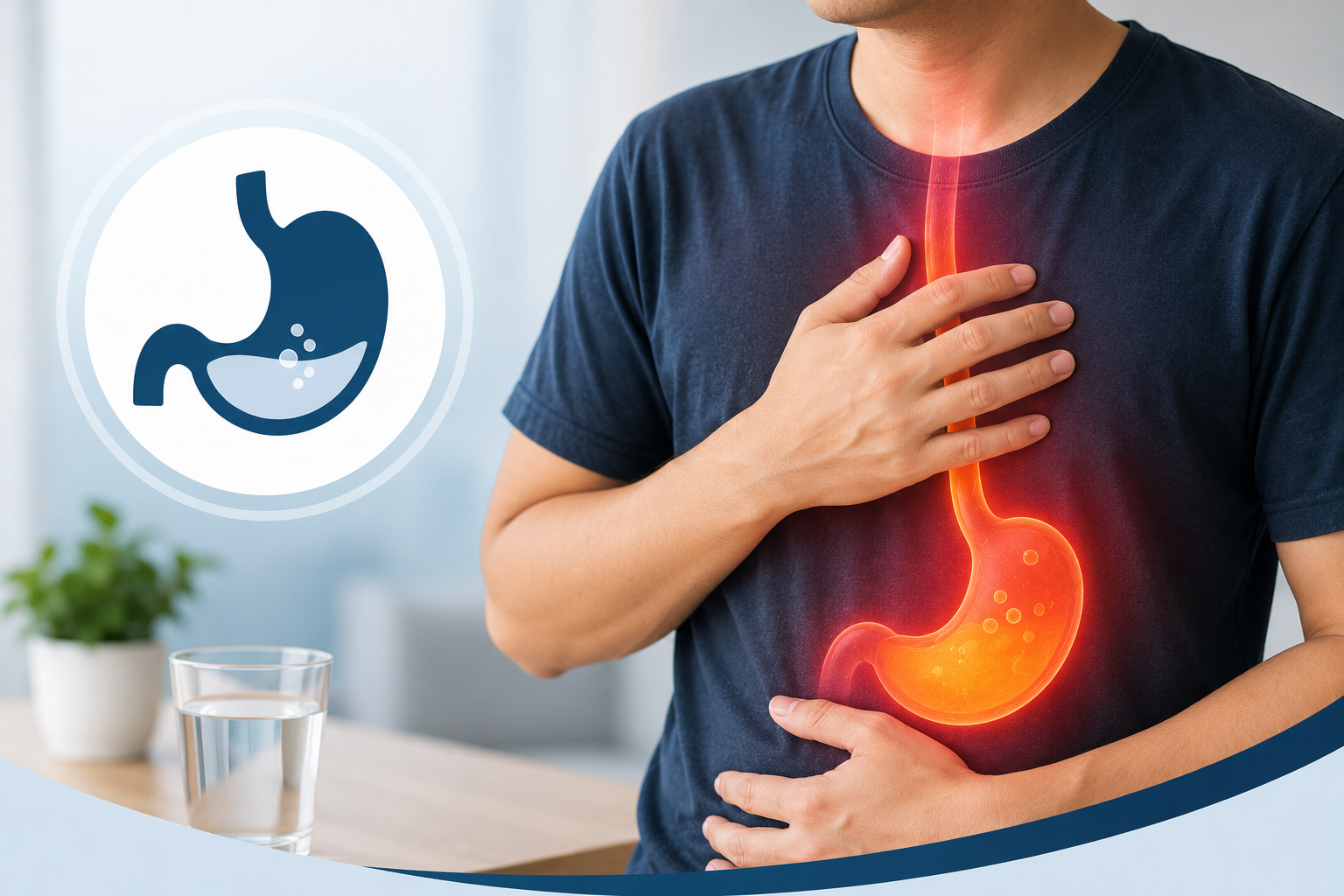
NIDDK notes that GERD commonly causes heartburn and regurgitation and that medical evaluation is appropriate when symptoms do not improve with lifestyle changes or over-the-counter treatment, or when warning signs are present.
TL;DR
- Recurring acidity is a symptom, not a diagnosis.
- Repeated acid reflux can be associated with GERD, a long-lasting reflux condition.
- Other possible causes include a hiatal hernia, certain medicines, excess weight, pregnancy, and individual lifestyle or dietary triggers.
- Frequent heartburn should not automatically be dismissed as "gas" or ordinary acidity.
- Warning signs include difficulty swallowing, persistent vomiting, gastrointestinal bleeding, unexplained weight loss, and concerning chest pain.
- Doctors usually begin with your symptoms and medical history before deciding whether testing is necessary.
- Depending on the situation, evaluation may involve upper GI endoscopy or esophageal reflux monitoring.
- If recurring acidity continues despite appropriate treatment, it may be time to see a gastroenterologist.
- Patients seeking digestive care in Khammam can find a Gastrointestinal department at Indus Hospital, Nehru Nagar, Khammam.
Is Recurring Acidity the Same as Acid Reflux?
Not exactly. People often use "acidity," "heartburn," and "acid reflux" interchangeably, but they describe related concepts rather than identical medical diagnoses.
Acid reflux occurs when stomach contents move backward into the esophagus. This can cause heartburn, a burning sensation behind the breastbone, or regurgitation, in which stomach contents or a sour taste comes back toward the throat or mouth.
When reflux becomes repeated and troublesome or causes complications, doctors may diagnose gastroesophageal reflux disease, or GERD.
That distinction is important. If you occasionally experience burning after a particularly heavy meal, it may not mean that you have GERD. But if heartburn keeps returning, wakes you at night, affects your daily life, or repeatedly requires medication, the pattern deserves more attention.
The question should shift from:
"What can I take for acidity?"
to:
"Why does this keep happening?"
Why Does Acidity Keep Coming Back?
There is no single explanation for recurring acidity. Several factors can contribute to repeated reflux symptoms, and sometimes more than one factor is involved.
1. Repeated Acid Reflux
The lower esophageal sphincter helps prevent stomach contents from moving back into the esophagus.
When this barrier does not function properly or relaxes at inappropriate times, stomach contents can move upward. This is the basic mechanism behind gastroesophageal reflux.
Repeated exposure can cause the familiar burning sensation of heartburn. If reflux keeps occurring, repeatedly treating the burning sensation without evaluating the overall pattern may not address the reason it keeps returning.
2. GERD
One of the most important possible explanations for frequent heartburn is GERD. NIDDK describes GERD as a more severe and long-lasting form of reflux in which repeated reflux causes bothersome symptoms or complications over time.
Common symptoms of GERD can include:
- Heartburn
- Regurgitation
- Chest discomfort
- Difficulty swallowing
- Pain while swallowing
- Nausea
- Chronic cough
- Hoarseness
Not every person with GERD experiences classic heartburn. This is why a proper medical history matters when symptoms are persistent.
3. Large or Late Meals
Meal size and timing can influence reflux symptoms. A large meal can increase pressure within the stomach. Eating shortly before lying down may also make reflux more noticeable.
For people experiencing GERD symptoms, NIDDK recommends discussing measures such as leaving 2–3 hours between eating and lying down.
If your acidity mainly occurs:
- After dinner
- After very large meals
- When you lie down
- During the night
keep track of the pattern and discuss it with your doctor. The timing itself can provide useful clinical information.
4. Personal Food and Drink Triggers
Certain foods and beverages can make reflux symptoms worse for some people.
Potential triggers can include:
- High-fat meals
- Spicy foods
- Coffee or other caffeinated drinks
- Carbonated beverages
- Chocolate
- Alcohol
- Tomato-based foods
- Citrus foods
- Mint
However, this does not mean everyone with recurring acidity needs to eliminate all of these foods. There is no reason to follow an unnecessarily restrictive diet if a particular food does not trigger your symptoms. Instead, identify your personal pattern.
Ask yourself:
What did I eat before the symptoms started?
How long after eating did the burning begin?
Does the same food trigger symptoms repeatedly?
A simple food-and-symptom record can help you identify patterns to discuss with a healthcare professional.
5. Lying Down Soon After Eating
Gravity helps keep stomach contents from moving upward. When you lie down soon after eating, that natural advantage is reduced. This is particularly relevant if you experience:
- Nighttime heartburn
- Reflux after late dinners
- Burning when lying flat
- Symptoms that disturb your sleep
Rather than simply taking something every night and ignoring the pattern, discuss recurring nighttime symptoms with a doctor.
6. Excess Weight and Abdominal Pressure
Body weight can be one of several factors associated with GERD. NIDDK identifies overweight and obesity as factors that may increase the likelihood of GERD.
This does not mean that every person with recurring acidity who is overweight has GERD, nor does it mean weight is the only factor involved.
It means that pressure within the abdomen and other physiological factors can influence reflux. If weight is contributing to symptoms, appropriate weight management may form part of an overall treatment plan.
7. Hiatal Hernia
A hiatal hernia occurs when part of the stomach moves upward through an opening in the diaphragm.
According to NIDDK, a hiatal hernia can increase the likelihood of GERD or make existing reflux symptoms worse.
You cannot determine whether you have a hiatal hernia simply because you experience heartburn. If symptoms continue despite appropriate treatment, your doctor may decide whether further investigation is appropriate.
8. Certain Medicines
Some medicines can contribute to reflux or worsen GERD symptoms. NIDDK lists several medication groups that may affect reflux, including certain sedatives, calcium channel blockers, some asthma medicines, NSAIDs, and tricyclic antidepressants.
This does not mean you should stop taking prescribed medicine. If you notice that your acidity started or became worse after beginning a medication, tell your doctor.
They can determine whether the medicine may be contributing and whether another approach is appropriate.
9. Pregnancy
Pregnancy can also increase the likelihood of reflux symptoms. Changes in the body and increased abdominal pressure can contribute to heartburn.
If you are pregnant and experiencing recurring acidity, discuss treatment options with your healthcare professional rather than starting or changing medication on your own.
What Digestive Problems Can Hide Behind Repeated Heartburn?
Recurring acidity does not always mean GERD. Some digestive conditions can produce overlapping symptoms, which is why persistent or unusual symptoms may need a more complete evaluation.
Dyspepsia
Dyspepsia, commonly called indigestion, can cause:
- Upper abdominal discomfort
- Burning
- Fullness
- Bloating
- Nausea
- Feeling full earlier than expected
Some symptoms overlap with acid reflux. A doctor may therefore consider the timing of symptoms, relationship to meals, medication use, medical history, and other symptoms before deciding what evaluation is appropriate.
Peptic Ulcers
Stomach or duodenal ulcers can cause upper abdominal discomfort or burning. Depending on the patient's history and symptoms, a doctor may consider factors such as H. pylori infection and certain medications.
Persistent symptoms should not automatically be attributed to ordinary acidity without considering other possibilities.
Esophagitis
Repeated reflux can irritate the lining of the esophagus. This inflammation, called esophagitis, can contribute to symptoms such as persistent heartburn or swallowing discomfort.
If swallowing becomes difficult or painful, this is an important warning sign that should be medically assessed.
Other Upper-Abdominal Conditions
Not every burning sensation in the upper abdomen comes from acid reflux. Depending on the exact location and nature of the discomfort, a doctor may consider problems involving the stomach, gallbladder, pancreas or other digestive organs.
This is one reason symptom location alone should not be used to self-diagnose a digestive condition.
How Common Is GERD in India?
GERD is a significant digestive-health issue in India, although prevalence estimates vary substantially between studies and populations.
An Indian Society of Gastroenterology position statement reported that published in 2019 estimates of GERD prevalence in India ranged from 7.6% to 30%, with prevalence below 10% in most population studies and higher estimates in some cohort studies.
A separate Indian study involving more than 3,200 participants across 12 centres investigated the frequency, symptoms, diet and lifestyle factors associated with GERD in the Indian population.
These numbers are useful for understanding the scale of the condition, but they do not diagnose an individual. Your own symptoms, medical history, risk factors and response to treatment are more important than a population statistic.
What Are the Warning Signs of Recurring Acidity?
Occasional heartburn is common. But some symptoms should prompt medical attention.
See a doctor if you experience:
- Frequent or persistent heartburn
- Symptoms that repeatedly return after treatment
- Difficulty swallowing
- Pain while swallowing
- Persistent vomiting
- Loss of appetite
- Unexplained weight loss
- Symptoms that significantly affect sleep
- Symptoms that interfere with daily activities
- Signs of gastrointestinal bleeding
NIDDK specifically identifies difficulty swallowing, persistent vomiting, unexplained weight loss, loss of appetite and signs of bleeding in the digestive tract as symptoms requiring medical attention in the context of possible GERD or another serious condition.
Do not automatically assume chest pain is acidity. Heartburn and cardiac chest pain can sometimes feel similar.
If you experience severe, unexplained or concerning chest pain - particularly with shortness of breath, sweating, dizziness or pain spreading to the arm or jaw - seek urgent medical care rather than assuming it is acid reflux.
When Should You See a Gastroenterologist?
A gastroenterologist may be appropriate when:
- Heartburn keeps returning
- Symptoms occur frequently
- Lifestyle changes have not helped enough
- Over-the-counter treatment is not providing adequate relief
- Symptoms return after treatment
- You have difficulty swallowing
- You have unexplained weight loss
- You experience persistent vomiting
- There are signs of gastrointestinal bleeding
- Your symptoms are difficult to distinguish from another digestive condition
NIDDK explains that doctors generally begin GERD evaluation by reviewing symptoms and medical history and may refer patients to a gastroenterologist when specialist diagnosis or treatment is needed.
The American College of Gastroenterology's clinical guideline also emphasizes appropriate evaluation of persistent or refractory GERD symptoms and the role of objective testing when indicated.
For someone searching for a gastroenterologist in Khammam, the goal should therefore be more than obtaining temporary relief.
The goal is to understand why the acidity keeps coming back.
How Is Recurring Acidity Diagnosed?
A gastroenterologist does not automatically order every possible test. Diagnosis generally starts with understanding the patient's symptoms.
Step 1: Review Your Symptoms
Your doctor may ask:
- How often does heartburn occur?
- When did it begin?
- Does it happen after meals?
- Is it worse at night?
- Does lying down trigger it?
- Do you experience regurgitation?
- Do you have difficulty swallowing?
- Have you lost weight?
- What medicines are you taking?
- What treatments have you already tried?
This information can help determine whether the symptoms fit a typical reflux pattern.
Step 2: Review Medical History and Risk Factors
Your doctor may also ask about:
- Previous digestive disorders
- Previous endoscopy
- Medication use
- Smoking
- Alcohol consumption
- Weight changes
- Pregnancy
- Family history
- Previous H. pylori infection
- Other medical conditions
This broader context can help identify possible underlying causes.
Step 3: Decide Whether Testing Is Necessary
In many cases, doctors can initially diagnose GERD based on symptoms and medical history.
NIDDK states that testing may be recommended when symptoms suggest a complication, another condition, or when symptoms do not improve after treatment with medicines and lifestyle changes.
Possible investigations include:
Upper GI Endoscopy
Upper gastrointestinal endoscopy allows a doctor to examine the lining of the esophagus, stomach and duodenum.
It may help identify inflammation, complications or another condition that could be responsible for symptoms. Biopsies can also be taken when clinically appropriate.
Esophageal pH Monitoring
Esophageal pH monitoring measures acid exposure in the esophagus.
NIDDK describes pH monitoring as the most accurate way to detect stomach acid entering the esophagus and notes that it can help confirm GERD or determine whether treatment is working.
Other Tests
Depending on the patient's symptoms and clinical findings, a gastroenterologist may consider additional investigations.
The important principle is that testing should be guided by the clinical question, rather than performed simply because symptoms have been present for a certain amount of time.
What Can You Do About Recurring Acidity?
If you have mild symptoms without warning signs, lifestyle measures may help.
1. Avoid Eating Immediately Before Bed
Leaving approximately 2–3 hours between eating and lying down may help reduce nighttime reflux symptoms in some people.
2. Identify Your Personal Triggers
Rather than eliminating every possible trigger, pay attention to foods and drinks that repeatedly worsen your symptoms.
3. Avoid Very Large Meals
If large meals consistently trigger heartburn, consider discussing meal size and timing with your healthcare professional.
4. Address Weight When Appropriate
For people who are overweight or have obesity, weight loss may reduce GERD symptoms.
5. Review Your Medicines
If symptoms appear after starting a medicine, speak with your doctor.
Never stop a prescribed medication without medical guidance.
6. Don't Depend on Self-Treatment Forever
Antacids and other over-the-counter medicines can provide relief for some people with occasional symptoms.
But recurring symptoms that continue despite appropriate treatment should be evaluated.
NIDDK recommends speaking with a doctor when symptoms do not go away with over-the-counter medicines.
Why Treating the Symptom Alone May Not Be Enough
There is a difference between relieving heartburn and understanding why it keeps happening. If an antacid makes the burning disappear temporarily, that can provide useful relief.
But if the same symptom returns again and again, ask:
What is causing the recurrence?
It could be repeated reflux, GERD, a hiatal hernia, medication, meal timing, excess abdominal pressure or another digestive problem. Persistent symptoms therefore deserve a broader view.
The Indian Society of Gastroenterology's evidence-based position statement addresses GERD epidemiology, presentation, investigations, treatment and complications specifically within the Indian context.
Digestive Care in Khammam
For patients looking for local digestive-health services, Indus Hospital, Nehru Nagar, Khammam lists a dedicated Gastrointestinal department. The hospital's public website identifies services related to esophagus problems, stomach problems, intestine problems, infections and trauma.
For someone experiencing recurring acidity in Khammam, the appropriate next step depends on the symptoms.
If the problem is occasional and mild, lifestyle adjustments may be enough.
If frequent heartburn continues, affects your quality of life or comes with warning signs, professional evaluation can help determine whether GERD or another digestive condition may be involved.
Frequently Asked Questions
Why does my acidity keep coming back?
Recurring acidity can be related to repeated acid reflux, GERD, certain medicines, excess abdominal pressure, a hiatal hernia, pregnancy or individual lifestyle and dietary factors. Persistent symptoms should be evaluated rather than repeatedly self-treated.
Is recurring acidity a sign of GERD?
It can be, but recurring acidity does not automatically mean you have GERD. GERD is a long-lasting condition in which reflux causes repeated troublesome symptoms or complications. A healthcare professional can assess whether your symptoms are consistent with GERD.
Can frequent heartburn be caused by something other than acid reflux?
Yes. Heartburn-like symptoms can overlap with other upper-digestive problems. Depending on your symptoms and medical history, a doctor may consider conditions involving the esophagus, stomach or other digestive organs.
Does everyone with recurring acidity need an endoscopy?
No. Doctors do not automatically perform endoscopy for every person with heartburn. Testing may be considered when symptoms suggest complications, another condition, or when symptoms do not improve with treatment.
Can recurring acidity damage the esophagus?
Long-standing GERD can sometimes cause complications, including esophagitis, esophageal strictures and Barrett's esophagus.
When should I see a gastroenterologist for heartburn?
Consider seeing a gastroenterologist when heartburn is frequent, persistent, difficult to control, repeatedly returns after treatment, or occurs with warning signs such as difficulty swallowing, persistent vomiting, gastrointestinal bleeding or unexplained weight loss.
Can lifestyle changes reduce acid reflux?
They can help some people. Depending on the individual, useful measures may include avoiding meals close to bedtime, identifying personal triggers, addressing excess weight when appropriate and changing habits that worsen reflux.
Can medicines make acidity worse?
Some medicines can contribute to reflux symptoms or make GERD worse. If you suspect a medication is involved, discuss it with your doctor rather than stopping it yourself.
Where can I seek digestive care in Khammam?
Indus Hospital, Nehru Nagar, Khammam lists a Gastrointestinal department covering areas including esophagus, stomach and intestine problems.
Final Thoughts
Recurring acidity should not always be dismissed as ordinary gas or indigestion. Occasional heartburn can happen to many people, but repeated symptoms may be associated with acid reflux, GERD or other possible underlying causes.
Pay particular attention when heartburn becomes frequent, interferes with sleep, keeps returning despite appropriate treatment or occurs alongside warning signs such as difficulty swallowing, persistent vomiting, gastrointestinal bleeding or unexplained weight loss.
The right approach is not necessarily to undergo every test or avoid every food. It is to understand the pattern, identify the likely cause and determine whether further evaluation is needed.
If you are in Khammam and experiencing persistent digestive symptoms, Indus Hospital provides a local Gastrointestinal department for digestive-health care.
External Sources
- NIDDK/NIH - Acid Reflux (GER & GERD) in Adults: symptoms, causes, diagnosis and treatment.
- NIDDK/NIH - Diagnosis of GER & GERD: diagnostic approach, endoscopy and esophageal pH monitoring.
- American College of Gastroenterology - Clinical Guideline for GERD: evidence-based recommendations for diagnosis and management.
- Indian Society of Gastroenterology - Indian Consensus on GERD: Indian epidemiology, clinical presentation, investigations and management.
- Indian Society of Gastroenterology Task Force - Epidemiology and Symptom Profile of GERD in India.